I LOVE Ranch salad dressing. But, recently I've been diagnosed with Celiac Disease and have to be very careful about what I eat. I'm also lactose intolerant. This recipe takes care of both of those problems. It can be made into a dressing or a vegetable dip.
Dry ingredients:
4 TBSP. Black Pepper- ground
3/4 cup Parsley Flakes
1/8 scant cup Garlic Salt
1 TBSP. Salt
4 TBSP Granulated Garlic
6 TBSP. Granulated Onion
1 heaping TBSP Dill Weed
Blend together thoroughly. Store in an airtight container. I use a quart jar.
For Salad Dressing- normal recipe GF and LF following
1 heaping TBSP. dry mix
1 cup Buttermilk
1 cup Sour Cream
1 cup Mayonnaise
1 tsp. Lemon Juice
Combine well with a whisk. Refrigerate until use.
Karla's Gluten-Free and Lactose-Free Version
1 heaping TBSP Dry mix
Make LF Buttermilk : In a 1 cup measure: Add 1 TBSP. Vinegar, fill the cup with Lactose Free Milk. Stir with a whisk and set aside for 5 minutes to thicken
1 cup lactose-Free Sour Cream (Green Valley Organics brand)
1 cup Mayonnaise (Hellmans)
1 tsp. Lemon Juice
Combine with a whisk until smooth. Store in the refrigerator. Mark the date of the milk on it as a "use before" date.
Dip:
1 heaping tsp. Dry Mix
1 cup Sour Cream
Milk to thin it out.
Combine and let sit for 10-15 minutes for the mix to rehydrate.
Sunday, June 7, 2015

Wednesday, December 17, 2014
Thursday, December 11, 2014
Monday, January 27, 2014
Gluten-Free Pantry Spaghetti

Here in my take on one of her favorite meals. If in a hurry, I start with a commercial canned sauce. Brand names are listed, but I'm not in any way being compensated for using them.
Spaghetti Sauce:
1-1 1/2 pounds of lean ground beef (we like meat, I use 1 1/2#)
2 TBSP. diced dried onions
1/4 cup dried mushrooms
1 tsp. Garlic Powder
2 rounded TBSP. Spaghetti Sauce seasoning
2 bay leaves
1 TBSP. Olive oil (may need more)
A few hearty grinds of Black Pepper
1 jar prepared Spaghetti Sauce (Francesco Rinaldi Tomato & Basil is GF)
1 pkg. BARILLA gluten-free spaghetti *
In a two cup measure dump the dried onion & mushrooms. Cover with hot water and set aside. When veggies are re-hydrated, drain off the water.
In a deep cast iron skillet (I use an Erie chicken fryer!) Heat up the skillet, then add the oil to coat the bottom. Brown the ground beef until no longer pink. Drain off the grease and dispose of it. Add the seasoning, garlic, bay leaves, black pepper and drained onions and mushrooms. Stir fry until the spices are fragrant. Add the jar of spaghetti sauce. Turn the burner down to simmer. Boil the Spaghetti according to package directions. If the sauce is too thick, ladle a little of the spaghetti water in it to thin it out.
* Barilla just came out with a line of certified gluten-free products. They are delicious! Some of the other brands I have tried have been less than satisfactory. They were tasteless and had a gummy, nasty texture. Not so with the Barilla pasta. Their spaghetti cooks in a little over 10 minutes. It's firm, holds together well and has a really nice texture. I can't recommend this brand highly enough. Get some and try it!
Monday, December 23, 2013
Bacon Corn soup
It's -4º F here in Iowa today. The weather outside isn't fit for woman or beast. But, it's perfect weather for a nice, steaming hot bowl of soup!
I dug in my pantry and came up with this. Enjoy!

I dug in my pantry and came up with this. Enjoy!

Bacon Corn Soup ALA Karla
3 Strips thick
cut Bacon- cut into cubes
1 small diced onion or 1 heaping TBSP. dried onion
4 cups Water
1 TBSP.
Chicken or Vegetable Base
½ tsp Mrs.
Dash
Pepper to
taste
4 cups cubed
potatoes (about 10 small)
1 can (12oz.) Evaporated Milk
1 can Corn
regular-drained (can use creamed if you
desire a sweeter soup )
Saute’ bacon
cubes and onion (if using fresh) in a 4 qt. saucepan until bacon is browned and
onion translucent. Drain grease if excessive. Add Water, broth paste, Mrs. Dash and
potatoes. Boil until potatoes are
tender. Turn down heat. Add evaporated milk and corn. Season with pepper if desired. I don’t add salt because the broth base is
loaded with it. Simmer for 5 minutes to
develop the flavors. Serve with some
crusty bread on the side.
Pilot Bread: Try this modern day version of hardtack
Hardtack has been an emergency ration since time immemorial. Here's a look at pilot bread, a modern day version of hardtack and why you should consider including it in your survival gear.
by Leon Pantenburg
I've carried and eaten hardtack since my time in the Confederate infantry, and baking it is another history-related activity I enjoy. When I'm really going primitive, hunting with my flintlock rifle, I might pack hardtack, jerky and dehydrated corn for lunch.
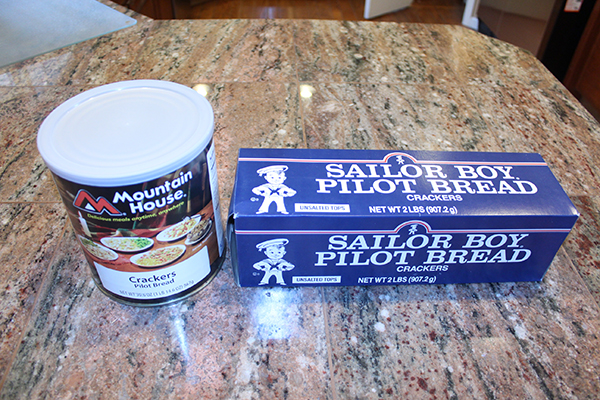 Pilot bread is a form of modern hardtack. Consider it as an addition to your storage foods.
But if you'd rather buy a similar hard cracker product for long term storage, take a look at pilot bread. I get my pilot bread from the Freeze Dry Guy, but the product is widely available. It's a good staple to have on hand - it's sorta tasty, durable, and has a long shelf life.
If I had to describe pilot bread, I'd call it a salt-less saltine, but with a tougher texture. While the bread is hard, it is easily bitten off, and the texture is much softer than the traditional recipe hardtack I make. Pilot bread also has fewer crumbs than a standard saltine. A nice feature is the durability - pilot bread with peanutbutter and/or fruit jam stands up well to travel in a daypack.
Pilot bread is a common storage food item in Hawaii, and Alaska and The Diamond Bakery "Saloon Pilot" cracker is available in many stores. Sailor Boy brand Pilot Bread is well-known in the Northwest United States and Alaska, and I got mine at the local Food 4 Less.
It is "a very inspirational food" in Alaska, according to the Sailor Boy Facebook page. Alaskans are among the last to eat hardtack as a significant part of their normal diet. Interbake Foods of Richmond, Virginia, produces much of the commercially available hardtack under the "Sailor Boy" label—98 percent of its production goes to Alaskans.
Originally imported as a food product that could handle rigorous transportation throughout Alaska, pilot bread has become a favored food even as other, less robust foods have become available. Alaskan law requires all light aircraft to carry "survival gear," including food.
The blue-and-white Sailor Boy Pilot Bread boxes are common at Alaskan airstrips, in cabins, and virtually every village. Whether it's topped with salmon spread, seal oil or old-school Crisco and sugar, chances are if you've ever lived in rural Alaska you're familiar with that long, rectangular, navy blue box. The Alaska Dispatch claims pilot bread is soul food for rural Alaskans -mothers give it to their babies to teeth on, village grocery stores, no matter how sparse, carry it on their shelves, and seldom does a hunting party venture out in the country, or a family head to fish camp, without a supply stowed away in someone's bag.
Lots of people have their favorite ways to enjoy them: topped with cheese or Spam or spread with peanut butter and jam or honey. You can also spread them with ground meat, cheese and tomato sauce and make pizzas. some people even know how to make "pizzas" with them.
For more info from the Alaska Dispatch click on pilot bread
While I use pilot bread frequently, I also bake hardtack for backcountry trips and the bread's conversational value around the campfire. Here is a very traditional hardtack recipe from the Civil War. When done, this hardtack has the consistency of a fired brick, and lives up to the nickname of "teeth dullers."
Army Hardtack Recipe
- 4 cups flour (preferably whole wheat)
- 4 teaspoons salt
- Water (about 2 cups)
- Pre-heat oven to 375° F
- Makes about 10 pieces
Place the squares on an ungreased cookie sheet in the oven and bake for 30 minutes. Turn each piece over and bake for another 30 minutes. The crackers should be slightly brown on both sides.
The fresh crackers are easily broken, but as they dry, they harden and assume the traditional texture.
Please click here to check out and subscribe to the SurvivalCommonSense.com YouTube channel - thanks!

Subscribe to:
Posts (Atom)